Finches do not read calendars, but their bodies follow the light. Between a Highland June and a December afternoon in Cornwall there is an enormous swing in daylight hours, and everything from song to feather condition answers to it. Working with that rhythm rather than against it means calmer birds, better plumage and fewer nasty surprises. What follows is the rough shape of a UK finch year, with the jobs that actually matter in each season.
Spring: breeding condition and the long climb towards summer
March to May is when most finches come into condition. Days lengthen, cocks start singing in earnest, and hens begin investigating anything that resembles a nest site. If you plan to breed, this is the moment to get the details right — and if you don't, you still need to manage the behaviour that comes with it.
- Nesting material: offer coconut fibre, sisal, clean dried moss, soft hay and short lengths of untreated string. Avoid long threads that can wrap around toes and cut off circulation.
- Calcium: cuttlebone, mineralised grit and crushed, baked eggshell should be available continuously. Hens laying repeatedly draw heavily on their reserves.
- Live food: waxbills, cordon bleus and other insect-eating species should have a gradual increase in small live foods as the season builds, not a sudden mountain of it.
- Nest sites: half-open baskets and boxes suit most species. Position them out of direct sun and away from the busiest part of the flight.
Watch hens closely in spring. A bird sitting fluffed up on the floor, straining or unusually still may be egg bound, which is a veterinary matter rather than something to treat by guesswork. Keep an eye out too for pairs that squabble endlessly — sometimes the kindest thing is to separate them for a few weeks and try again.
UK spring nights can still bite. A frost in late April is entirely normal, so don't rush to remove windbreaks or open up a sheltered aviary too early. Cold is usually manageable for acclimatised finches; cold combined with wet and draught is not.
Summer: moulting, heatwaves and keeping water clean
Summer splits neatly into two jobs that often overlap.
Supporting the moult
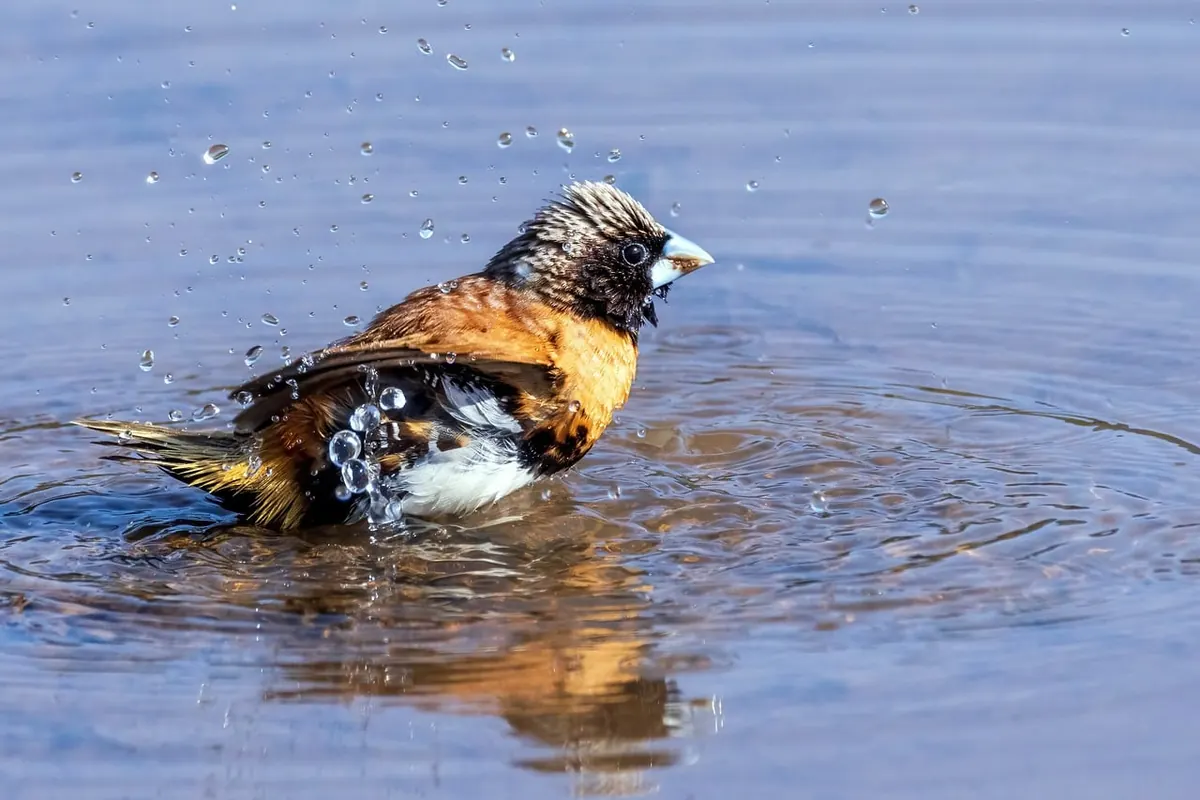
Many finches drop their old feathers in late summer, and a moulting bird looks scruffy, quiet and a little sorry for itself. Feathers are mostly protein, so this is the time to lift the quality of what you feed rather than the quantity. Egg food, sprouted seed and a little mashed hard-boiled egg mixed with fine biscuit will help new plumage come through strong. Keep bathing water available daily — it helps loosen pin feathers and settle irritated skin.
Coping with a heatwave
Finches handle British heat reasonably well until the mercury climbs past the high twenties, and then things get serious quickly. Shade is the first priority: a section of aviary roof covered with a shade cloth, or dense planting along one side, gives birds somewhere to retreat. Offer shallow dishes for bathing and change drinking water at least twice a day in hot spells — algae and bacteria multiply fast in warm drinkers.
Know the warning signs of heat stress: wings held away from the body, open-beak panting, a bird sitting low and still. Move it to shade, offer cool water, and leave it alone. Never handle finches in the middle of a hot afternoon, and never leave any bird in a glass tank or a covered cage in direct sun.
Autumn: the deep clean that pays for itself in winter
Once the moult has finished and breeding has stopped, give the whole setup a proper going-over. This is the single most useful few hours you will spend all year.
- Move the birds to a spare cage or a holding flight.
- Strip out and bin all old nesting material — it harbours mites and holds damp.
- Scrub perches, feeders, drinkers and nest boxes, then rinse and dry them completely.
- Check crevices and joints for red mite; treat with a bird-safe product or diatomaceous earth and repeat the check a fortnight later.
- Replace cracked perches, split wood and anything that traps dirt.
- Let everything dry thoroughly before the birds return.
Autumn is also when indoor keepers should set up lighting timers. A sudden drop to eight hours of grey daylight can leave birds lethargic and poor-feeding, so aim for a steady ten to twelve hours and adjust gradually.
Winter: nutrition, unfrozen water and shelter
Winter is the quiet season, and its main demands are food and dryness. Finches cope with cold far better than with damp, so sort out leaks, replace soggy bedding and keep the sheltered end of the aviary genuinely dry.
Bump up the energy content of the diet with a little extra niger, hemp or sunflower hearts for the larger species, alongside the usual seed mix and fresh greens. Kale, spinach, grated carrot and broccoli florets work well when garden greens are scarce, and sprouted seed is an excellent winter standby. Water freezes: bring drinkers indoors overnight, use two sets and swap them, or fit a safe heater designed for bird baths.
Indoor birds need some access to natural light, since a dim room through the winter months is not enough to keep them in good condition. A window position with morning sun is worth more than most equipment.
A quick seasonal checklist
If you remember nothing else, keep these four things in view: in spring, calcium and nesting material; in summer, shade and clean water; in autumn, one thorough clean; in winter, food quality and unfrozen drinkers. Everything else is refinement.
Lastly, watch your birds rather than the calendar. A hen that looks unwell, a bird losing weight or one showing laboured breathing needs attention whatever the month, and a good avian vet is worth finding before you need one.
Photo: DavidClode / Pixabay