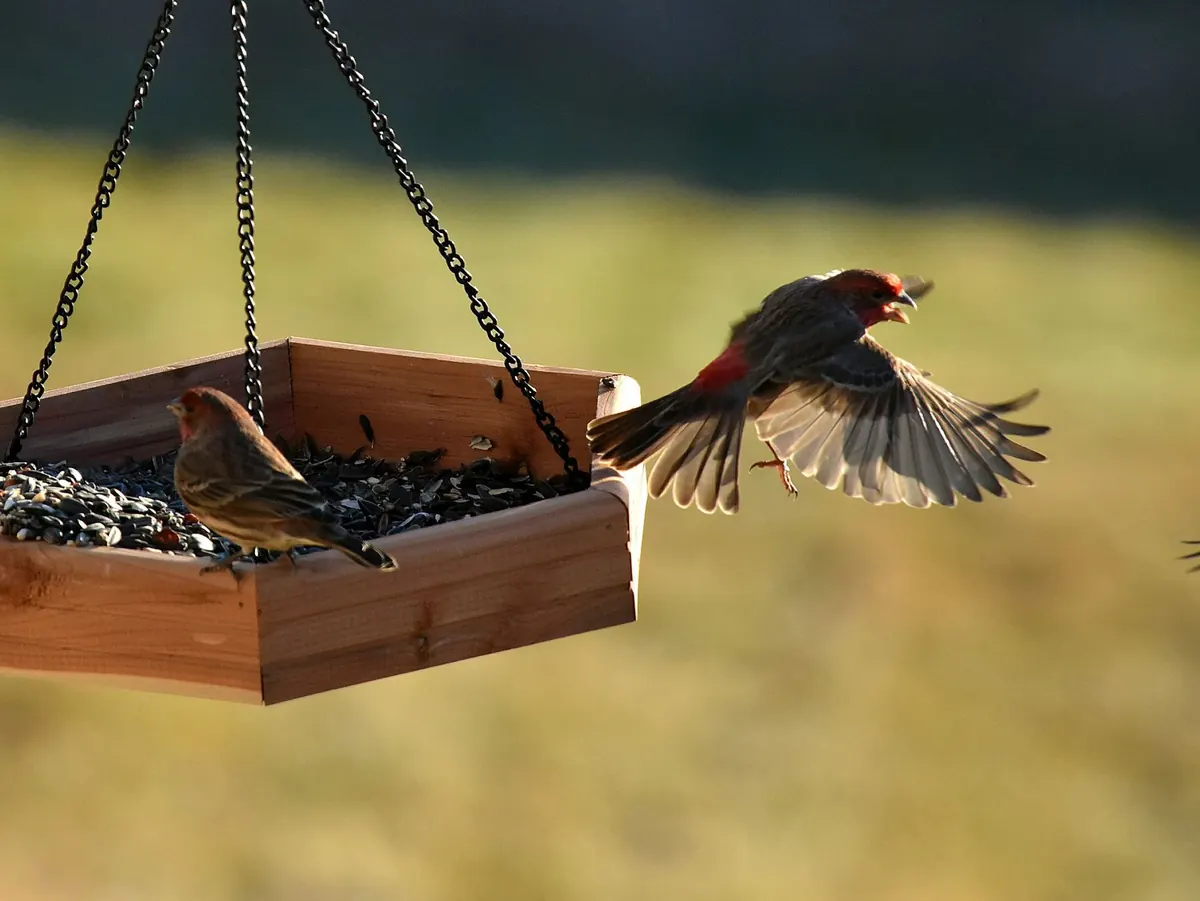
Finches are the quiet achievers of the bird-keeping world. They won't sit on your finger, learn a tune or talk. What they will do is hop, chatter, bathe enthusiastically and busy themselves all day in a way that's genuinely calming to watch. In a flat or a small house where a parrot would be too loud and too demanding, a pair of finches makes an excellent introduction to keeping birds.
The basics really are simple: a decent flight cage, varied food, clean water and a few minutes a day. Get those right and you'll have healthy birds that live for years. Get them wrong — a single finch in a tiny cage beside the radiator — and you'll have a stressed bird and an owner wondering what went wrong.
Which finches suit a beginner
Not all finches are equally forgiving. Some are hardy and adaptable; others need warmth, careful diets or more peace and quiet than a busy family living room can offer.
Zebra finches are the classic first bird, and deservedly so: hardy, inexpensive to feed, endlessly busy and tolerant of ordinary indoor temperatures. They breed readily — sometimes too readily — and can be nippy with other species, so they do best as a pair or small group of their own kind.
Bengalese finches, often called society finches, are the gentle alternative. Calm, rarely quarrelsome and happy to share space with other placid species, they have been kept in captivity for so long that they are remarkably tolerant of human company. For a first pair, they are arguably the safest choice of all.
Species to leave for later
Gouldian finches are beautiful but more delicate, and they do best in a warm, stable room rather than one that swings between a January draught and a hot radiator. Owl finches, waxbills and canaries are lovely too, but each needs more space or more careful management. Save them for your second or third pair.
Always start with two
Finches are flock birds. A single finch kept alone is a stressed finch, even when it looks perfectly fine. Two is the minimum. Same-sex pairs work well: two males will sing and squabble gently, two females stay quieter and won't lay eggs. If you don't want to deal with breeding, say so clearly when you buy, because finches breed easily and some sellers will happily hand over a mixed pair.
Choose birds that are alert and moving about, with smooth feathers, bright eyes and clean vents. A finch sitting fluffed up on the cage floor with half-closed eyes is not simply tired. Where you can, buy from a breeder rather than a general pet shop: you'll usually get healthier birds, better advice and someone to ring if something goes wrong.
Housing: width beats height
Finches fly horizontally, not upwards, so a wide cage beats a tall one. For a single pair, look for something at least 60–75cm across, and more if you can manage it. Bar spacing of roughly 1cm to 1.2cm suits most small finches; anything wider and they may squeeze through or trap their heads. Avoid round cages, which leave nowhere to retreat to, and skip anything sold mainly as an ornament. Natural wood perches of varying thickness are far better for their feet than uniform plastic dowels.
Set the cage at eye level in a room you actually use, but away from:
- Kitchens — fumes from non-stick pans, hot oil and aerosols can harm birds quickly.
- Draughts, and open doors or windows onto the garden.
- Radiators and fires, or anywhere the temperature swings sharply.
- Scented candles, plug-in air fresheners, sprays and smoke.
- All-afternoon sun, and speakers or televisions turned up loud.
Night-time matters too. A quiet corner, a cover over part of the cage and a steady routine help new birds settle. If the room turns cold overnight, a little gentle background heat is kinder than a sudden chill.
Feeding a first pair
Seed alone, however good the mixture, is not a complete diet. A sensible routine looks like this:
- A quality finch seed mix as the base, refreshed daily and sieved free of husks.
- Egg food, or a little hard-boiled egg, a few times a week — especially during a moult.
- Small pieces of fresh greens: kale, broccoli, spinach, grated carrot, apple. Remove anything uneaten after a few hours.
- Cuttlefish bone and a little fine grit, always available.
- Clean water in a shallow dish, changed at least once a day.
Millet spray is a fine treat and a good way to tempt a nervous new bird into eating. Avoid avocado, chocolate, caffeine, alcohol and salty snacks. If you're unsure whether a food is safe, leave it out and ask a vet who sees birds.
Common first-pair mistakes
Most beginner problems are avoidable. The usual ones are buying one bird instead of two, a cage that's too small, a spot in the kitchen, seed and nothing else, and assuming that a fluffed-up, quiet bird is simply settling in. In any finch, sitting puffed up, going off its food or passing unusual droppings means a call to a vet with bird experience — and early, not in a few days' time.
Two more worth knowing. Keep a new bird briefly separate and observe it before introducing it to your pair. And don't mix finches with budgies, cockatiels or other parrots: the size difference causes injuries, and parrots can bite off toes.
A realistic routine
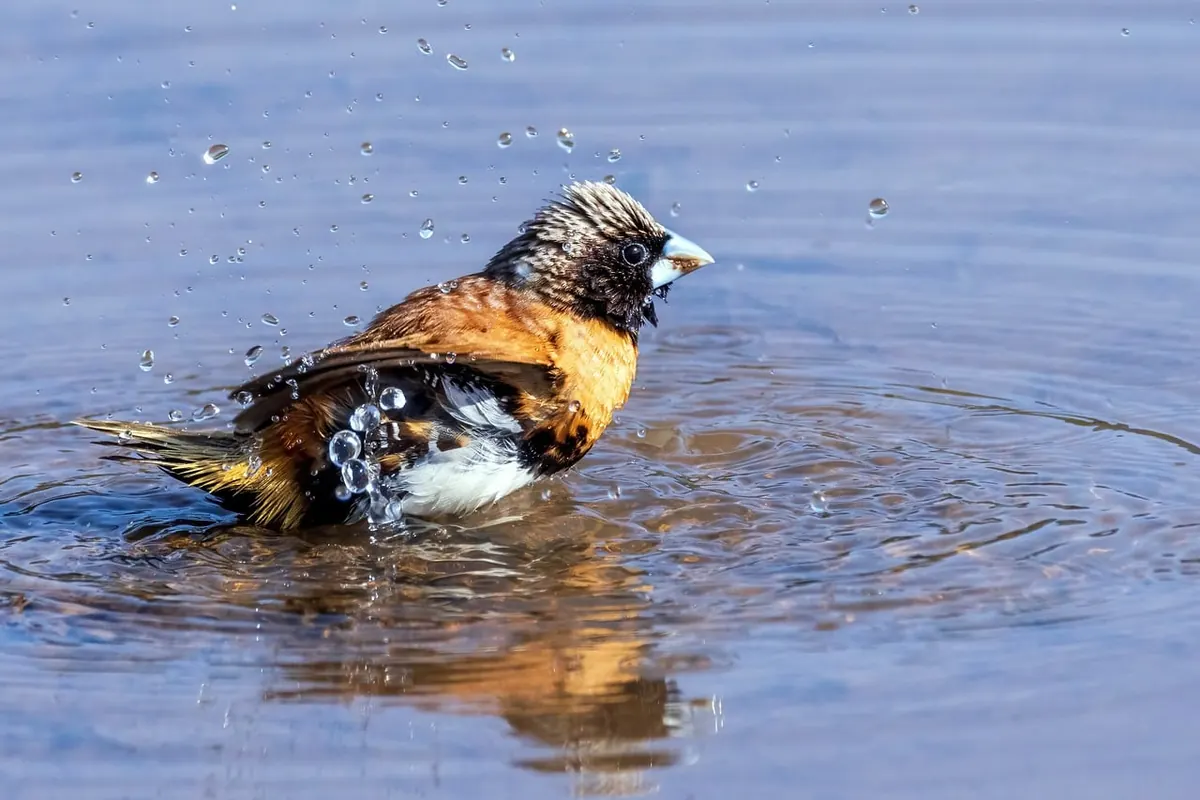
Fifteen minutes a day is genuinely enough. Refresh the food and water, check both birds look well, and watch them for a while. Once a week, clean the cage properly, replace the liner, wash the dishes and check the perches. Now and then offer a shallow dish of water to bathe in — most finches love it.
Find a vet with bird experience before you need one and keep the number somewhere handy; this is general guidance, not veterinary advice. Beyond that, finches ask very little of you except consistency. Keep the cage clean, the room calm and the diet varied, and the pair you bring home this weekend could still be chattering away in five years' time.
Photo: stux / Pixabay