Two finches arrive, and the empty cage in the corner suddenly looks far too small. That is usually how it goes. Finches are tiny, quick and endlessly busy, and the setup they need is not complicated — but it does need to be right before they move in. Get the basics sorted and a pair will spend their days flying, bathing, chattering and squabbling gently over the best perch. Here is how to build that setup from the cage upwards.
Start With the Cage: Size, Shape and Bar Spacing
Finches fly horizontally, not upwards, so a wide cage beats a tall one every time. For a pair of small finches such as zebra or society finches, look for something around 75–80cm wide, at least 45cm deep and 45cm high as a minimum. More space is always better, and if you have room for a flight cage closer to a metre wide, take it — your birds will use every centimetre. Round cages and tall, narrow "birdcages" give finches nowhere to fly, which is the one thing they most want to do.
Bar spacing matters more than many new keepers expect. For zebra and society finches, roughly 1cm to 1.2cm is about right: narrow enough that a bird cannot push its head through, wide enough to see the room. Smaller waxbills and similar species need narrower spacing still. Check the cage for rust, chipped paint and sharp edges before anything else goes in it.
A quick checklist for the cage itself
- Wide rather than tall, with clear horizontal flight space
- Bar spacing suited to the species, roughly 1–1.2cm for small finches
- A slide-out tray so cleaning is a two-minute job, not a wrestling match
- Secure doors — finches learn to nudge them open surprisingly fast
- Ideally two doors, so you can reach the far end without emptying the cage
Perches: More Than One, and Not All the Same
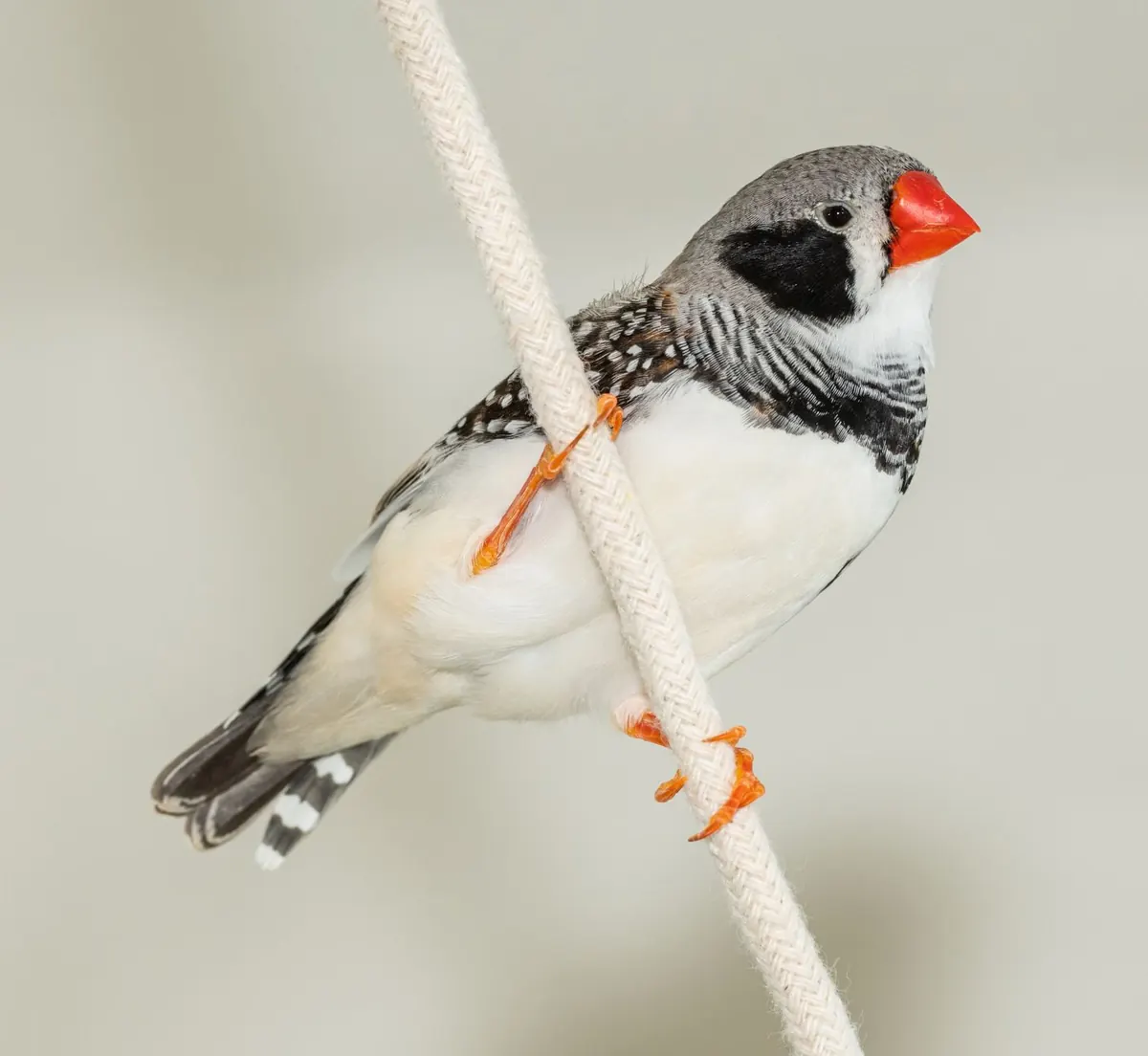
Natural wood branches are the best default. Varying diameters, roughly 1cm to 2cm, let the feet grip differently and exercise the toes rather than pressing the same spot all day. Sandpaper-covered perches sold as "foot files" are worth avoiding; they can abrade the soles of the feet instead of helping them. Plastic dowels are fine as a small part of the mix, but they should not be the only option.
Set perches at different heights and leave a clear flight path between them, so the birds can hop, flutter and dash from one end of the cage to the other. Keep at least one perch out of the firing line above the food and water dishes, or you will be scrubbing droppings out of the seed bowl daily. A perch near the front of the cage lets the pair watch the room, which most finches enjoy.
Feeders, Water and Grit
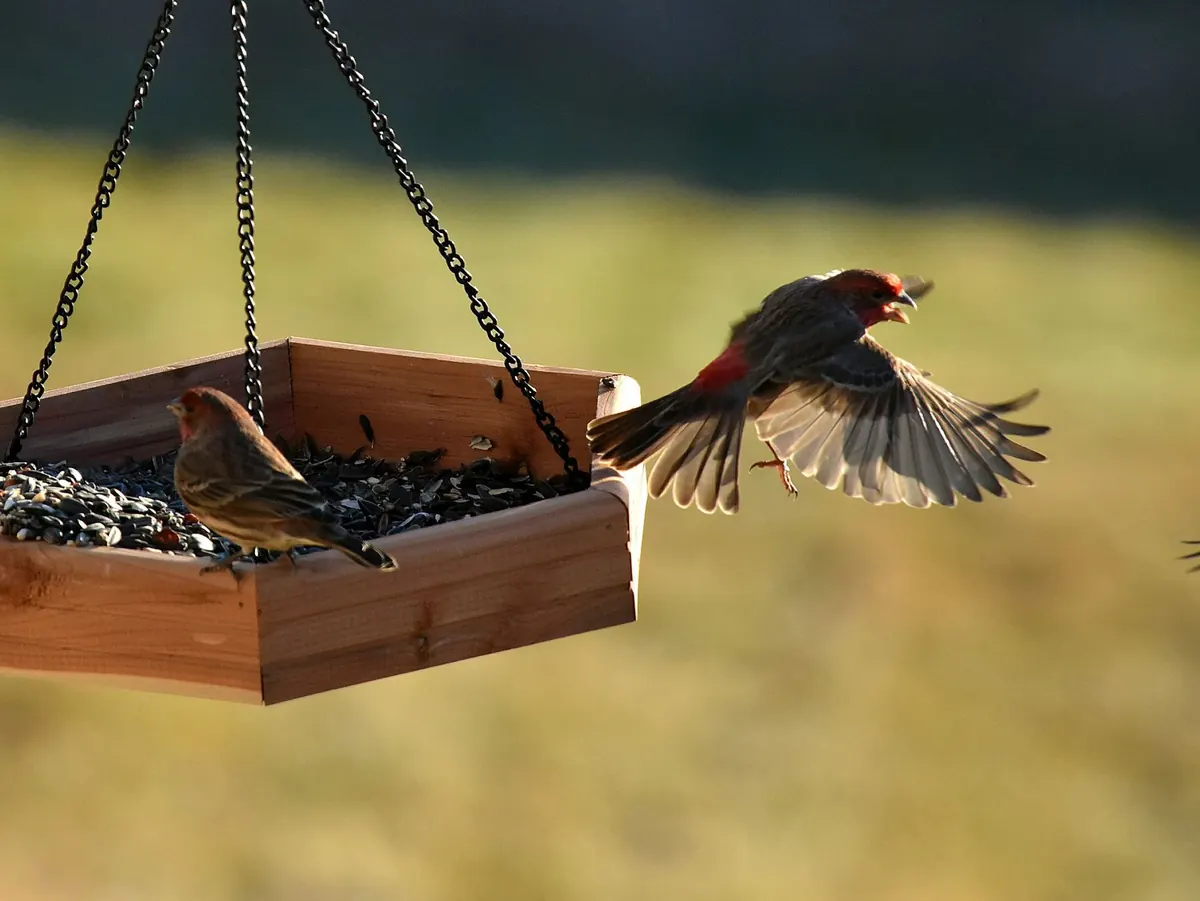
Two finches mean two eating stations if you can manage it. Finches are peaceful by nature, but they do jostle, and a bird that keeps getting chased off the only feeder can lose condition quickly.
- A seed hopper or two shallow dishes for a good-quality finch seed mix
- A separate small dish for soft food or egg food during moulting and breeding
- Fresh water in a drinker or shallow bowl, changed daily — twice daily in warm weather
- Cuttlefish bone clipped to the bars for calcium
- A small grit dish alongside it
Position the water drinker away from the seed dish, because finches scatter empty husks everywhere and a bowl of floating husks is not appealing. Shallow dishes suit ground-feeding finches better than deep ones, and everything should be washed in hot soapy water at least once a week. If you are unsure what supplementation your particular species needs, ask an avian vet rather than guessing.
Bathing
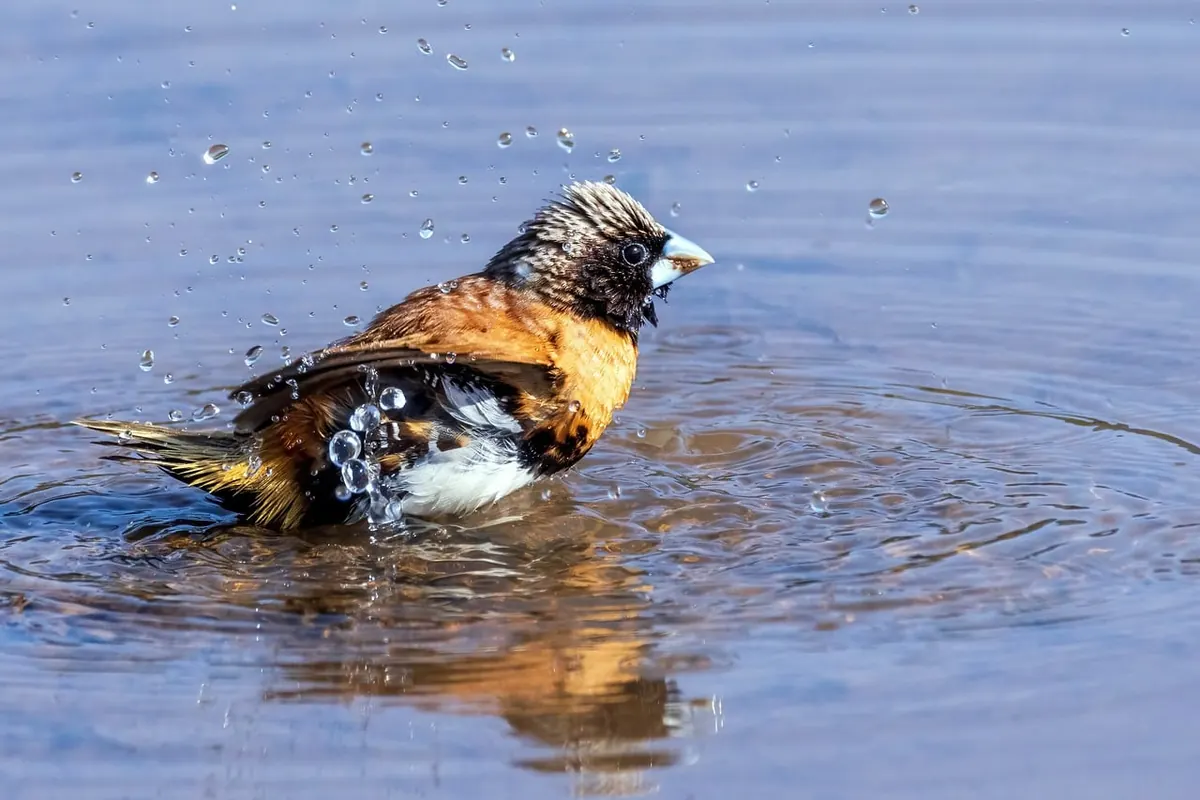
Finches bathe often and enthusiastically, and a bath is one of the cheapest bits of enrichment you can offer. A shallow dish no more than 2–3cm deep, filled with room-temperature water, is all it takes. Offer it in the morning or early afternoon so the birds have time to dry before the room cools for the night, and take it out afterwards — a bowl of used bathwater should not be their drinking supply for the rest of the day.
Never leave deep water in the cage, and do not add anything to the bath. Some finches ignore a bath for a fortnight and then dive in headfirst; others will happily bathe in the water drinker if you let them, which is exactly why a dedicated bath dish is worth having.
Where to Put the Cage
Placement shapes a finch's day more than most accessories do. Work through this list before you decide.
- Away from the kitchen. Cooking fumes, hot oil, aerosols, scented candles and overheated non-stick pans are all harmful to birds.
- Out of draughts, and away from radiators, air-conditioning units and doors that open to the outside.
- Not in direct sun all day. Finches need light, but a cage in a hot south-facing window can overheat quickly.
- At roughly eye level. Birds feel safer above floor level but dislike something looming over the cage.
- In a room the household actually uses, with a quiet corner the pair can retreat to.
- Well out of reach of cats, dogs and any other pet with paws or an interest in small fluttering things.
Night-time
Finches need a proper night's sleep, somewhere in the region of ten to twelve hours of dark, quiet time. If the room is used in the evenings, drape a light cloth over part or all of the cage and keep lights-out at a consistent time. A television flickering until midnight counts as a disturbed night.
Setting It All Up, Step by Step
- Choose the spot in the room before you assemble anything.
- Wipe the cage down, then fit the tray and a fresh liner.
- Add perches — at least three, at different heights, natural wood wherever possible.
- Position the feeders and the water drinker, keeping the water clear of any perch above it.
- Clip cuttlefish bone to the bars and add the grit dish.
- Put the bath dish in only when you are there to take it out again.
- Leave everything in place for a few days once the birds are in, so they can learn the layout.
The First Few Days
New finches are nervous, and a pair that hides in the corner for a day or two is behaving perfectly normally. Keep noise and foot traffic low, resist the urge to handle them, and let them find the food and water in their own time. Do watch that both birds are eating and drinking. A finch that sits fluffed up on the floor is not settling — it is unwell, and a vet visit is worth arranging sooner rather than later.
After a week or so, settle into a routine: fresh water in the morning, seed topped up, a bath offered, tray spot-cleaned. Once a week, strip everything out, wash the dishes and perches in hot soapy water, and scrub the tray properly. Simple, consistent, and done often — that is what keeps a finch cage pleasant for the birds and for you. If anything about their health or behaviour worries you, speak to an avian vet rather than waiting to see how it goes.
Photo: Petr Ganaj / Pexels